

A while back here on the site, I shared some of my concerns about cashless gaming, which is predicted to over time replace the Ticket In, Ticket Out (TITO) system that has been ubiquitous on casino floors in recent decades. My concerns were largely around the various clunky scenarios, as well as the fees that applied.
During my most recent trip to Las Vegas, I spent a couple nights at Penn Entertainment’s M Resort. Penn has been among the more aggressive around implementing cashless gaming. At the time I visited M Resort, they were heavily promoting their solution, basically offering $50 Penn Cash, worth $100 in food comps (due to a weird quirk in the conversion rates of their players club program), for people to try it out.
I love food, and it was enough of a bribe to give it a go. What I encountered was a pleasant surprise.
Getting Started
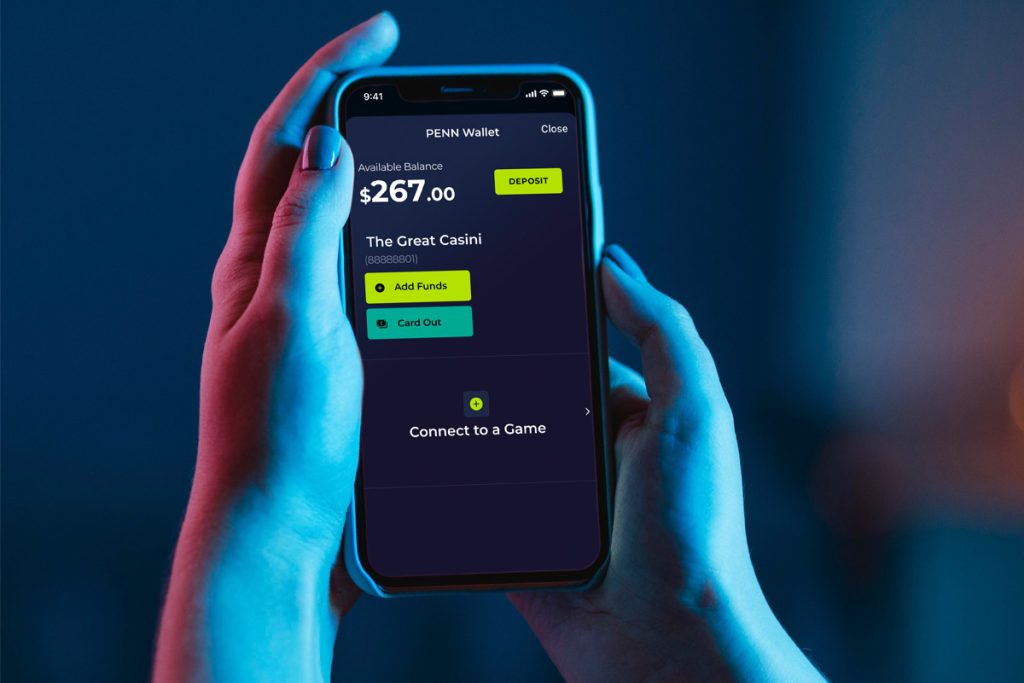
Penn is using a wallet solution from Everi that is embedded into their Penn app, where they’re offering something called a Penn Wallet. The first step is to create a wallet, going through various steps to establish where you’ll hold money (and verify who you are).
You then attach a bank account, linked through a service like Plaid, nothing new for those of us who have linked our bank accounts in various ways (such as through online casino or sports betting apps).
While those steps took a few minutes, I was able to complete them on my phone while awaiting my friend to finish up his own dealings with the players club desk.
Depositing Money
Once you set things up, you can deposit money at no charge with your bank account. The lack of a charge matches online betting, but critically also fixes one of the major issues I saw with previous solutions, which were charging a transaction fee as a percentage of your deposit.
While I get casinos may not want to cannibalize ATM fees, many of us tend to go to an ATM at our bank before heading to the casino, which means they weren’t getting that fee anyway. Given gambling is a losing person’s game in the end, the fees felt arbitrary and unnecessary, so this was a great thing to see.
Accessing Funds at a Slot
Perhaps the best part of this setup was how you could access the funds. First, no players card is needed. You put your phone near the card reader on the slot machine or other electronic gaming machine and connect to it via the app. Within a couple of seconds it indicates it’s linked. Then you click Add Funds, and you can decide how much of the balance on hand you wish to deposit into the machine, which transfers about as quickly as inserting a bill.
This is a far better setup than what I’ve experienced before. Previously, you would access a menu, enter a PIN, select an amount, all on small screens on the slot that are sometimes not well calibrated or responsive. Here, the work is being done by your cell phone, which tends to be more reliable.
Walking Away from a Slot
When you are done, you can card out on the app to disconnect. During my visit the funds were not returning to the balance in the wallet, so a manual cash out was required. Even if funds were reliably returning to the wallet I’d still advise caution, as if you disconnect and the funds don’t return for whatever reason, you could be leaving money behind.
One time I forgot to disconnect the app and walked away from a slot (I left no money behind). It wasn’t long before my phone alerted me that I was disconnected for having drifted too far away, so unlike leaving a card behind, where some casinos don’t time out the card for an extended period, this disconnects right away.
Other Observations
The biggest gap during my visit at M Resort was table play wasn’t supported yet, but the table pit said that was getting ready to ramp up too. The resort was in its final months of construction before launching a second hotel tower and was concluding other updates and renovations, so it seems like all that will be ready in time for the additional customers visiting the property.
It also looked like you could link to two games at once, although I never attempted it. If you like to play two machines at a time, this does seem to be supported, so you don’t have to lose out on your ability to use your wallet, and you’ll get credit for play on both machines electronically. Presumably both need to be nearby your phone, or else it’d disconnect.
Another limitation is that the wallet is limited to Penn properties. If that’s your local and/or where you play a lot, that can be helpful, but if you’re in a place like Las Vegas, you may not want your money locked up in a wallet at a single casino.
Of course, you don’t have to overfund your wallet, but I could see a frustration if you have to have a different wallet for every casino or casino chain, and keep track of where your money is. Your wallet with cash is universal and accepted everywhere.
I’m Feeling More Bullish
The complexity and cost of earlier cashless systems gave me pause, but Everi’s solution feels much more mature and complete. If this is the direction cashless is going, I’m more likely to leverage it the next time I’m at a casino that supports it. I’ll be doubly so if they incentivize me as generously as Penn did, but compared to carrying a lot of cash around, this is a nice alternative as well.
One critical benefit is how well built and integrated this wallet is into Penn’s app and casino. Clearly some IT investment happened here, and given how often I see substandard tech solutions in the wild throughout casinos, this was a pleasant surprise.
Good implementation of cashless systems like this will encourage adoption more broadly, while bad implementations could scare players away (or every casino having their own flow that can make things frustrating to keep track). Everyone in the industry needs to keep an eye on this if they want this to be a standard in the future.













Resorts World also has this option and I believe its also Everi. I would use cashless if they were able to transfer a jackpot that way, instead of getting cash. Its good for people not to carry a bunch of cash.
But I’m still afraid someone will use a skimmer or something to still cash from the app.
We did see Resorts World’s implementation, Roz, and at the time it came out they posted a 5 minute marketing video on how to do it – and that alone felt intimidating. The current content looks more streamlined, and we’ll likely give it a go at some point. But the scanning of a QR code vs. just linking via Bluetooth still feels more clunky to us.
The good news is since you have to actively initiate the transfer on your phone in either of these solutions, they would need access to your phone to be able to take money, so keeping your device on hand (and locked when not in use) is good practice to reduce the risk. And as you noted, carrying cash also has its risks, so it’s about that balance of convenience and security in either case!
Wouldn’t it be far easier to simply load funds to your Player’s Card? When I’m carrying cash, which is currently the only option, I’m tempted to insert more money to continue playing. If I preloaded a sum onto my Player’s Card, it would help me stick to my budget for that gaming session (yes, I know that I could simply stick more cash in the machine even with a funded card). Accessing that cash would require entering a PIN, so while it isn’t the MOST secure system, there is still an element of security there.
Hey Larry – the process as you describe does exist out there, and so that’s another approach that’s been taken to make cashless gaming accessible. The biggest flaw is those little screens can be a struggle to stay calibrated, so it can prove frustrating to keep trying to enter your PIN and the wrong numbers get pressed, or it fails to detect the presses at all. But we can confirm seeing the PIN-based approach in multiple settings, so that is one way it’s rolling out.