

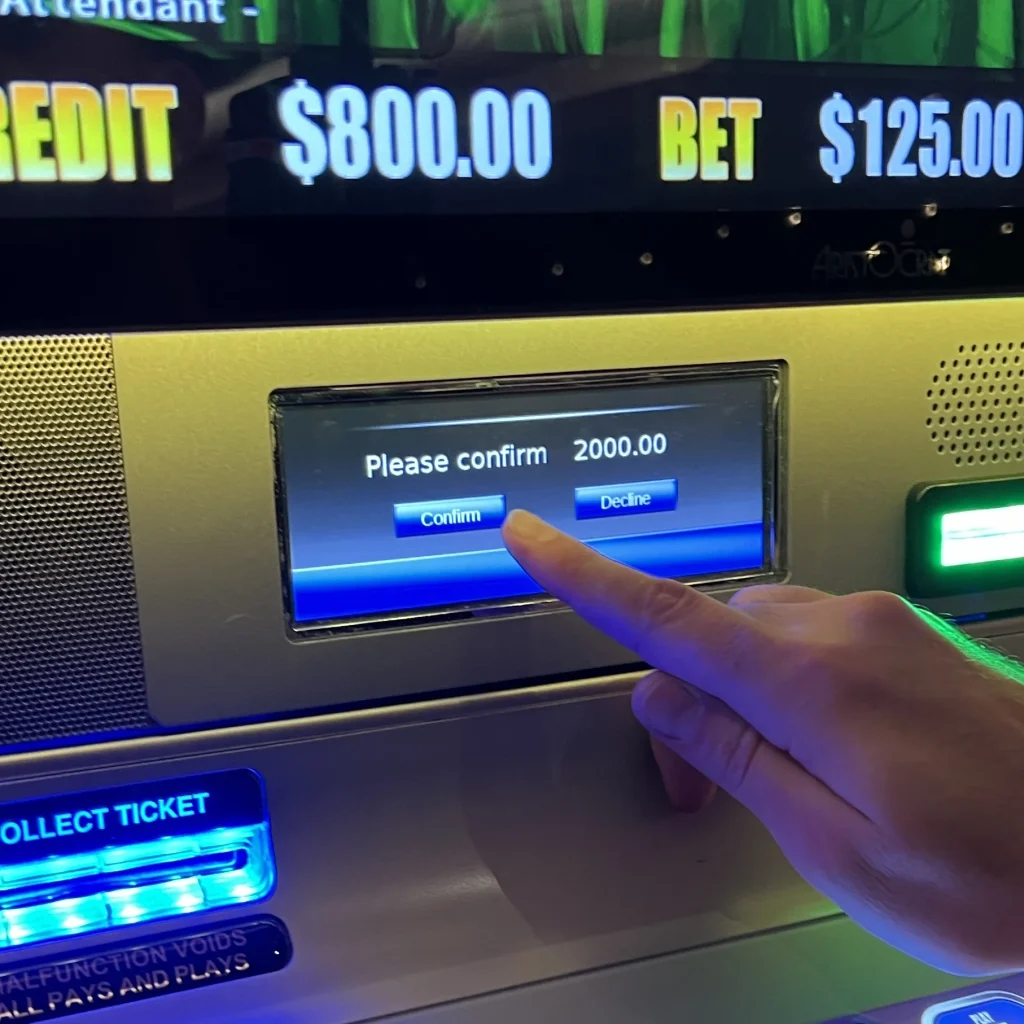
In a short we shared on Flip The Switch, Brian Christopher talked about Self Pay, or Fast Pay, which reduces the frequency a player needs to wait when they receive a jackpot handpay.
In the short, Brian noted many smaller casinos don’t offer it, and others limit it to just the high limit room, in part because of the cost involved in offering it. That led to a question from a player:
In regards to the self pay feature: What kind of costs are there with this? Do they (casinos) have to pay the state or federal a “fee” for using it? Is it the cost of programming each machine? The cost of the program?
Ginger
We don’t have any inside knowledge of the cost of the system, but do know that casinos that offer it are paying a technology provider to assist with the program. Tax paperwork has to be automatically generated and tracked (something casinos, through the slot attendants, was probably doing somewhat more manually before this), and a system that rolls up the jackpots into the daily paper players ultimately receive.
Since this interacts with the slot machines and the players card systems (since accepting a jackpot is done via a PIN on the players card screen), we presume the cost of the system goes up as the number of slots it interacts with increases, some sort of a utilization cost based on the number of machines involved or the number of jackpots processed.
Players won’t see any costs from these systems, as these are costs owned by the casino. And we wouldn’t anticipate any special costs to submit the documentation, unless the new system is doing something the casino doesn’t already have in place to submit the paperwork, although we’d expect that to be built into the overall system costs anyway.
So why just high limit at some casinos? Since many times players playing lower limit slots aren’t as likely to hit a jackpot because of the smaller bets often played on them, for some casinos it’s a calculation that there’s less likelihood a player will rack up a bunch of jackpots on the main floor, so its use there is more limited.
For players that get jackpots only occasionally, and rarely more (if ever) than one in a visit, self pay/fast pay has limited value. There’s not a bunch of jackpots to roll up, and waiting for one jackpot is a limited delay compared to high bettors who could hit jackpots with relative frequency, and potentially be kept waiting for each one as they occur.
The recent increase in the jackpot handpay limit is also going to reduce the frequency of jackpots overall going forward, given reports that more than half of jackpots before the change were for amounts between $1,200 and $2,000. So it makes sense that when you combine cost and utility, casinos will often focus on the high limit rooms as the target for such functionality, maximizing the reduction in waiting for players most impacted while minimizing cost.
And be sure to follow Flip The Switch on Facebook to keep up with original content posted regularly, including multiple shorts per week!
Have a question? Submit yours here!













