

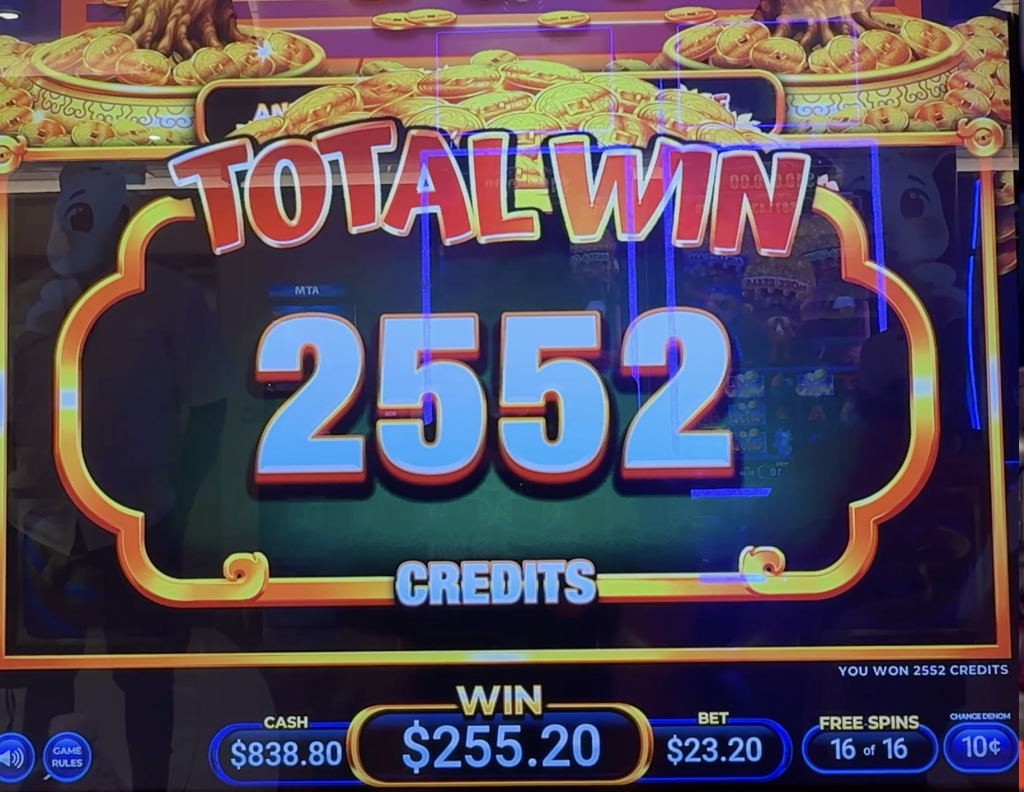
While we’re on a roll, let’s take a look at another assertion that’s been made on our social pages recently about slot machines:
Casinos can limit bonuses on all machines.
Ron T.
Here’s the thing: They can’t.
Here’s what they can do: Choose what payback percentage a machine is set to deliver over time.
That’s all, nothing more.
They can’t choose when a bonus happens (or doesn’t happen).
They can’t decide who gets a good bonus and who doesn’t.
They can’t cap bonus performance.
They can choose to cap a progressive, either at its starting point (you see this a lot in markets like Las Vegas or Atlantic City) or at some sort of pre-defined upper limit. Oftentimes a sticker on the machine will inform you of this, or information with the pay table (and sometimes both).
Because a small percentage of the payback comes in the form of those prizes, that effectively works as an extension of setting a payback percentage for a machine. So it goes basically right back to that one decision within their control.
They can’t even choose any random percentage – the companies that make the games give the casinos a set amount of options (usually around a half dozen) within a range that usually falls between 85 and 98 percent. Casinos can’t choose an option that doesn’t exist. (They also can’t choose an option that falls below the legally allowed minimum in the jurisdiction they operate.)
If the game doesn’t offer a setting that works for them, they simply don’t offer the game, but most slots and other games tend to have a range of options that work for most casinos based on what they want to offer. That helps the game makers have a chance to sell or lease the most copies they can.
Players give the casinos way too much power in their heads. And casinos don’t need that power, because by the simple fact of setting the payback percentage, they are configuring the machine to make the amount of money they want to make off their casino floor’s machines, and machines are generally set in numbers in a range that matches that goal.
More of the control goes into the hands of the game makers, as it should. Game makers want to design slots, table games, and other casino games that are fun. So they will decide where to set guard rails to cap bonuses (say, a maximum number of free games), and bake it into a game design that’s then reviewed by a third party lab to certify it works as designed.
Game makers will decide what payback options, and will sometimes discourage or even skip certain payback options if it messes with the way a game plays too much to be fun.
You see, if players get a poor experience at one casino, it might turn off a player from playing it at any casino – and that doesn’t help the game makers who are trying to sell those games. It’s even more critical if a game is leased, because continued play is the key to a successful lease, because casinos will want to keep paying that fee and keep them around.
And one last thing – for various reasons regulators would never allow scenarios where casinos control who win. Otherwise uncle Jack and sis Jill would likely suddenly be benefitting a lot, right? And ultimately the players who don’t have a friend on the inside would lose too much and not want to come back. The most successful casinos thrive on repeat business, and that means a fair shake at something good.
So the casinos aren’t incentivized to mess with you because they don’t need to. And the game makers have a vested interest in building something you want to play. So back to that article from the other day where a player says it’s a computer and therefore anything can be done. Theoretically, yes, but the incentives aren’t there, the regulations don’t allow it and ultimately, a game with a house edge will do its work.
Slots have among the higher house edges. They also have among the fastest amount of wagers per minute. And that speed gets faster as the games continue to tighten how long various steps take.
Have a question? Submit yours here!













