

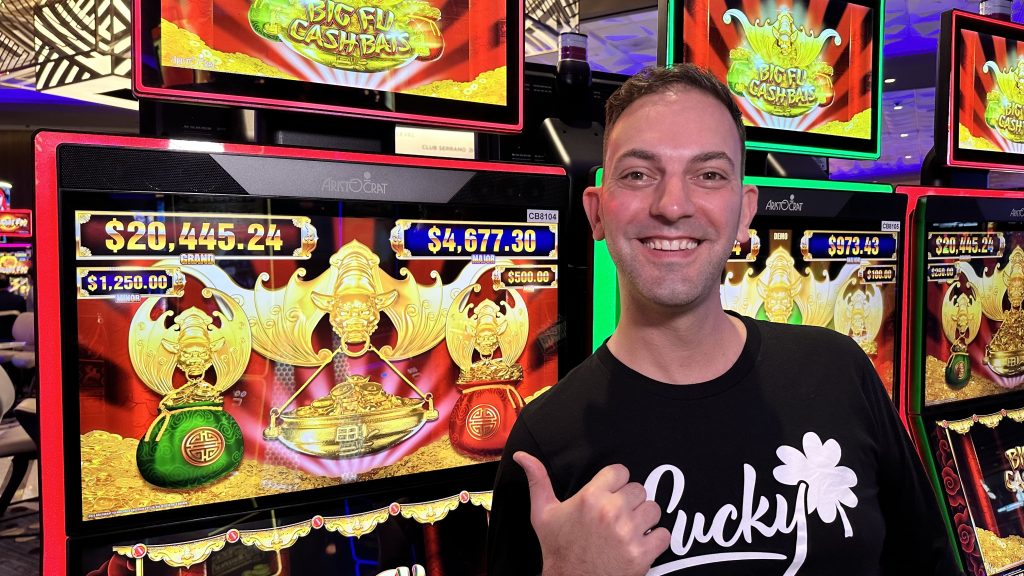
Regular viewers of Brian Christopher’s content hear him discuss the concept of “maxed out majors” on some slot machines. Brian recently played on a slot with a maxed out major in this video:

One player has a theory as to why they’re maxed out:
There is a reason why the maxed out major occurs… because the machine is not paying bonuses and the money all goes to the major. How can you spend $8,000 without a bonus?
Melvin G.
The way a major grows has nothing to do with your wins or losses in a session, with the exception of whether or not you hit the Major itself (because it resets when it is hit). Progressives are fueled generally through one of two ways (although there can be the odd other structure here and there):
- Based on amount wagered (the most frequent method by far)
- Based on amount won (much more rare scenario)
Even in the case of the latter structure, losing would keep the progressive from growing at all, but the most common structure sees a percentage of your bets going to the meter on the progressive. A progressive may increase once cent for every dollar bet, for example – so regardless of how much winning or losing goes on, it’s still incrementing at the same pace.
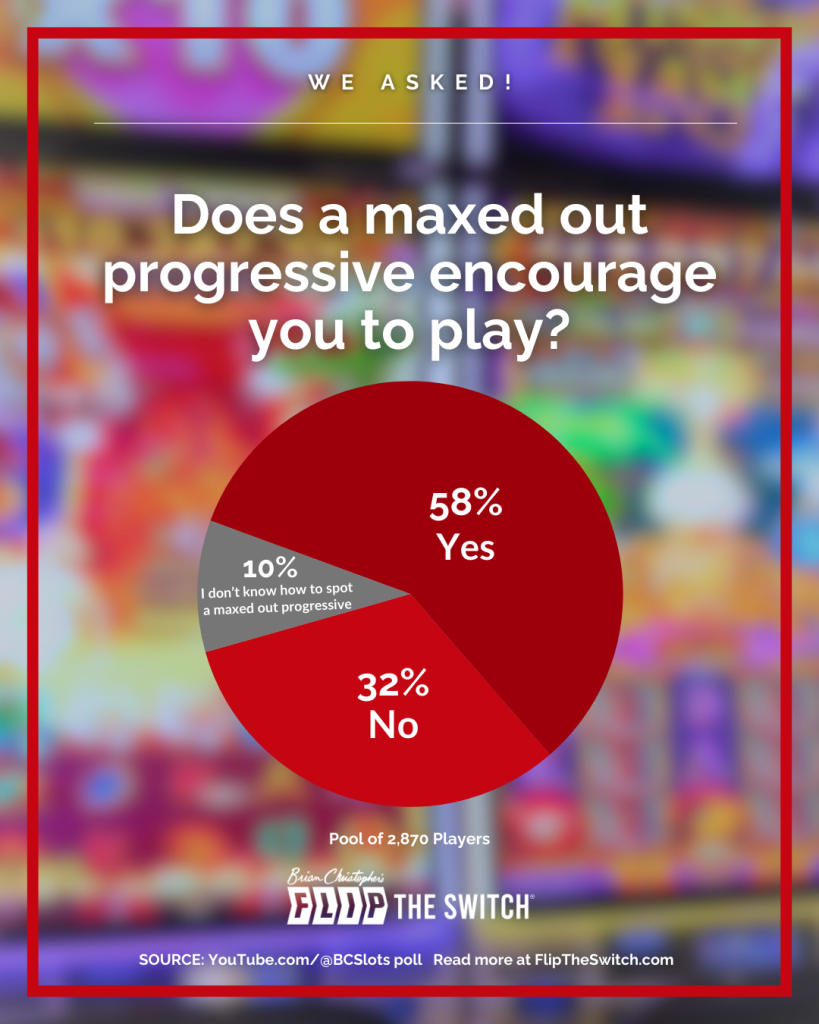
Bonuses aren’t based on how much you spend either, as you saw in the video. Bonus frequency is part of the design of any slot, and some slots bonus more frequently than others, by design. But because randomness plays a role in slots, you can go hundreds of spins without a bonus on a slot designed to bonus more frequently overall. We shared a mathematical example in a previous article.
So no, it’s not maxed out because a machine is not paying. In fact, the machine could be giving out all sorts of other wins while the Major remains elusive – that progressive is a small percentage of the machine’s overall payouts, so being maxed or not really only gives you information about when the Major was last hit, more so than the overall payout of the slot.
Have a question? Submit yours here!













