

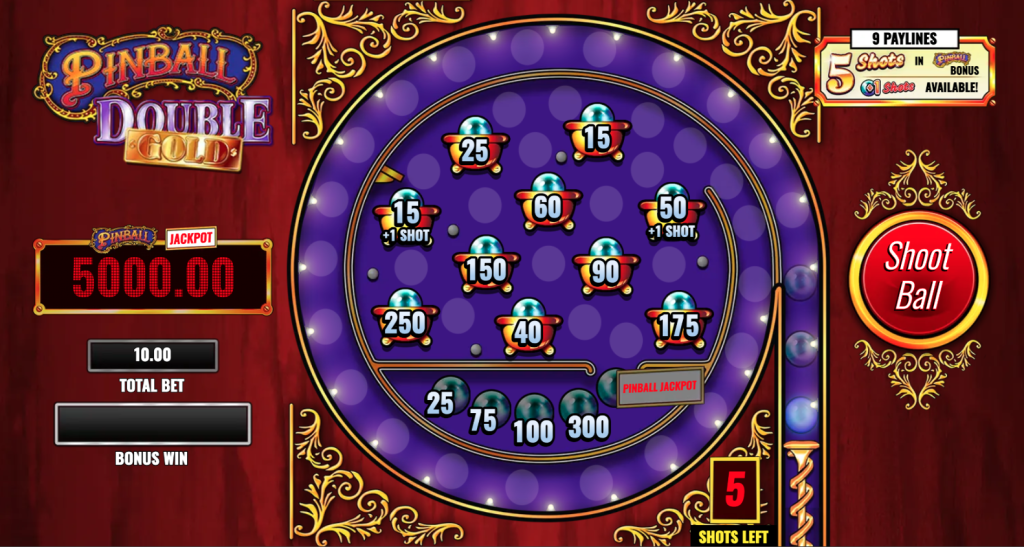
Recently I was working on an article about some of my favorite museums to check out in Las Vegas. While I was reading up on one of those locations, The Pinball Hall of Fame, I was surprised to find out that these popular arcade classics used to be illegal. This is because the nostalgic game was considered a form of gambling before a key feature was introduced.
While I am certainly no expert in the field of pinball, I have included some of the more interesting and introduction level history points below plus some information on the popular IGT Pinball title and The Pinball Hall of Fame itself.
The History of Pinball
The very beginning of what would become a staple of American pop culture can be traced back to France in the 18th century. The original game was called “Bagatelle” which later evolved into “The Bagatelle Table.” The first iteration required players to use a cue stick, similar to a pool cue but not identical, to aim balls into holes at the opposite end of the table. Although it gets a little unclear, as with most history from that far back, one thing for certain is that Montague Redgrave took out a patent in 1871 for the “The Improved Game of Bagatelle.” Redgrave’s version eliminated the sticks and introduced the plunger that is still a key feature of the game today.
Redgrave’s innovations to the game, plus the inclusion of a coin collector courtesy of Charles Young, brought it closer to what we call pinball today. This more modern version first started gaining traction in the United States in the 1930s. At that time, it was viewed as a game of chance, not skill, because the game’s design did not include the all important “flipper.” The flipper is the term given to the player operated paddles that can be used to redirect the pinballs from the bottom of the play field back up towards the top to keep the game going.
Because of this key missing element that introduced a person’s own strategy and skill, the game was viewed by many, including some government officials, as a form of gambling. This classification meant that the games were deemed illegal in many parts of the country.
In attempts to keep the game alive and try to become a legal form of entertainment, pinball manufactures did two things: they changed the design of the game, where D. Gottlieb & Co added the flipper in 1947, and then started promoting the game as one of skill rather than chance.
These changes meant that the game manufacturers, and the various businesses that offered the games to patrons to play, could start advertising pinball as a totally legal game of skill. This evolution of play, coupled with the younger generations’ more disposable income (especially when you take into account The Great Depression had an impact on their families from 1929-1939), meant the game was around to stay.
Personally, I remember in the early 2000s I was incredibly envious of a classmate who had a full size pinball game in their basement. It was incredibly novel to me that they had the game at their disposal and they could play anytime they wanted. It was much more enticing to me than the pinball game that came standard on computers of the time, although I definitely logged countless hours on that digital version too.
Almost a hundred years after their introduction, pinball machines can still be found in many arcades, pizza parlors, and game rooms around the world. The game is clearly still beloved by many, in any form, including being represented as a mini game in one of the latest Nintendo Switch hits, Waluigi’s Pinball Arcade in Super Mario Party Jamboree.
IGT’s Pinball
Chances are, if you are reading this article, you have encountered another popular homage to the classic arcade game in the form of IGT’s Pinball slot machine. Considered by many to be one of the most popular and tenured games on the floor, this slot version of pinball has become a mainstay in many high limit rooms across the country.
If you are lucky enough to land the right number of pinball symbols on a payline, you get the chance to take a crack at a fairly lucrative bonus. Depending on your bet size, you are given a certain number of pinballs to launch and then watch them land in one of the cups labeled with credits (although this is a game of chance, not skill – slots and skill games had their moment, but that’s a story for another day).
A big part of the arcade fun is thanks to the sounds of the pinballs ricochetting around the play field. The designers behind the game made sure to include fun sound effects that mimic those classic pinball sounds. The game designers also made sure to include other key elements like the “plunger,” the mechanism that is depressed and released to launch the balls into play.
I have always gravitated towards this title because it is incredibly easy to understand and I feel like you have a fair shake at the bonus. Plus, it doesn’t hurt that this is one of the few games my husband will seek out if he joins me for some gambling action. Our favorite is the $1 denomination nine line option. While the line hits are typically harder to come by, we appreciate the chance of landing a big bonus prize with every ball launch.
Even before learning more about the history of the game, I always wondered if the design team behind the game just really liked pinball or if there was something more to the story. Now with a better understanding of the origin of the game, I have an (as of now) unconfirmed hunch that its storied past might have played a part in the inception of the casino game.
You can see Brian take Pinball for a spin here:

The Pinball Hall of Fame
If the history behind pinball interests you, you should consider taking a trip out to The Pinball Hall of Fame next time you are in Las Vegas. Whether you’re chasing the nostalgic feeling of the past or are just looking for an indoor activity suitable for all ages, The Pinball Hall of Fame is a great addition to any trip.
The museum, which recently moved into a larger space, features 25,000 square feet of everything pinball plus some extra surprises. All the games are in playable condition – just make sure to bring a decent amount of quarters or small bills (USD under $20) to run through their quarter change machine. To help inform just how many quarters you need, games pre-1990 typically cost 25 cents per round, while the newer titles sit at about 50 cents – certainly budget friendly for those looking for an affordable entertainment option! Plan your visit here.













