

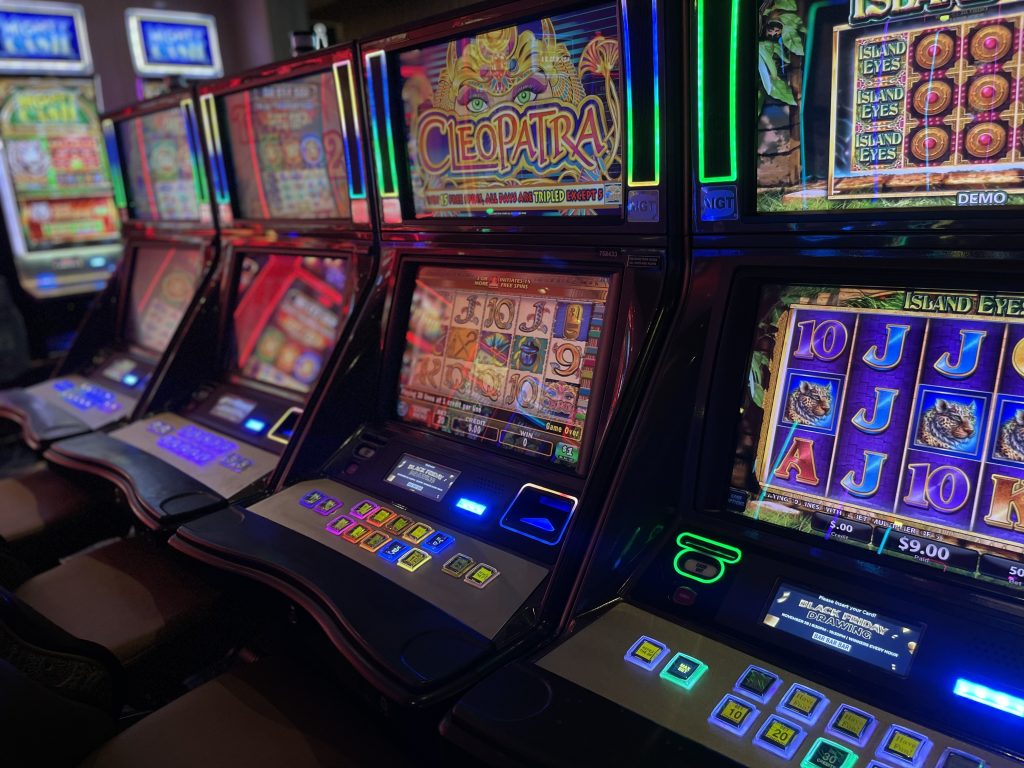
Most casinos have some amount of older machines lingering on the casino floor. In recent years the percentage has been shrinking, but there will inevitably be older and newer options on casino floors. One player has a theory why:
Don’t older machines stay around because they don’t pay. Those are the money makers for the casino.
Troy E.
Most slots are money makers for the casinos. With a house edge that’s often on the higher end of casino games relative to other options, and with a cost structure that tends to be lower than table games and other casino options, it’s the perfect mix of higher margin and lower cost.
But there are reasons why older slots stick around. Here’s a few of the most common.
They Still Get Played
If a slot is still a good performer, regardless of age, casinos are loathe to remove them and take a risk on something else which may not do as well. So, if a game is still putting up respectable enough numbers, even if it’s older, it’ll stay on the floor.
A great example is the banks of Lightning Link and Dragon Link machines. The former is now a decade old, with Dragon Link approaching that milestone as well. But their enduring popularity means the machines stick around. In scenarios like this the manufacturer will ensure the games are available on newer slot hardware, so casinos can keep the game on their floor if the machines need replacement.
The Casinos Own Them
Generally a percentage of slots on a casino floor are owned by the casino, with the remainder being premium machines that are either leased or have a participation percentage shared with the manufacturers (the latter is most often the case for slots with wide area progressives).
Casinos have been more open to having a higher percentage of leased machines, but economically they generally like to have some percentage of machines that they own. Replacement cycles of those will vary based on things like a casino’s budget for that in any give year, and how the various slots are performing.
Casino Economics
Casinos can’t replace all their owned machines at once, so certain banks stick around while others get updated. But that doesn’t mean they’re making massive money in all cases.
Even if those older machines aren’t being played as much, they have a limited continuing cost to the casino while they’re in working order. If the machines are functional, and parts when needed are readily available, a casino may opt to keep the machines around even under those circumstances.
Recent Trends
The trend in the last few years of eliminating long rows of machines with circular pods (with less machines than the rows they replaced) and more space has also led to less older machines sticking around, and the overall count of slot machines on a floor going down as well.
Casinos realized during the pandemic that even though they turned off half of their machines for spacing, their revenue didn’t drop by half – and keeping all those long rows of older slots to have a full floor wasn’t necessarily a requirement.
Other Thoughts
We’ve talked about how slot paybacks don’t often get messed with once set up. The same goes for those older slots, but another factor is there are older slots who have minimum paybacks (as designed by the manufacturer) that are higher than the slots that are available to casinos today.
If a casino keeps those old slots around, their payback can actually be higher than newer games on the floor. So sometimes ignoring those old machines could mean giving up a bit of the long term payback for all the new bells and whistles.
Many older machines also don’t have the complex array of bonuses, features and progressives newer machines have. To fund all those features, line hits are often reduced and the money moved into those other elements.
If a slot has progressives that are 2% of its payout, unless you’re the one who wins the prize, the rest of the game is paying 2% less over time. That can make a difference if you’re a regular casino visitor.
Takeaway
The older slots are there for a reason, but it’s not because they don’t pay. There’s a variety of reasons why a slot lives on – player favorites, casino budgets, ownership – that determine when a slot is replaced or kept around.
Have a question? Submit yours here!










I love the old fashioned slot machines—Maybe ’cause I’m an old bag!!!
We love ’em too Amy!