
Keno is similar in concept to a lottery. You pick your numbers, a certain number are drawn, and if you match the right amount, according to the pay table, you win. Regardless of which numbers you pick, the odds of a win are the same, as the odds of matching some combination are the same.
That doesn’t mean some don’t think it’s skill based:
Why do people see Keno as a game of skill when it’s clearly a game of chance?
Garet N.
We think it simply comes down to the fact that there is an aspect of involvement of the players when it comes down to picking their lucky numbers. Because they have that element of control over which numbers are the potentially winning ones, they think there’s some skill involved to it.
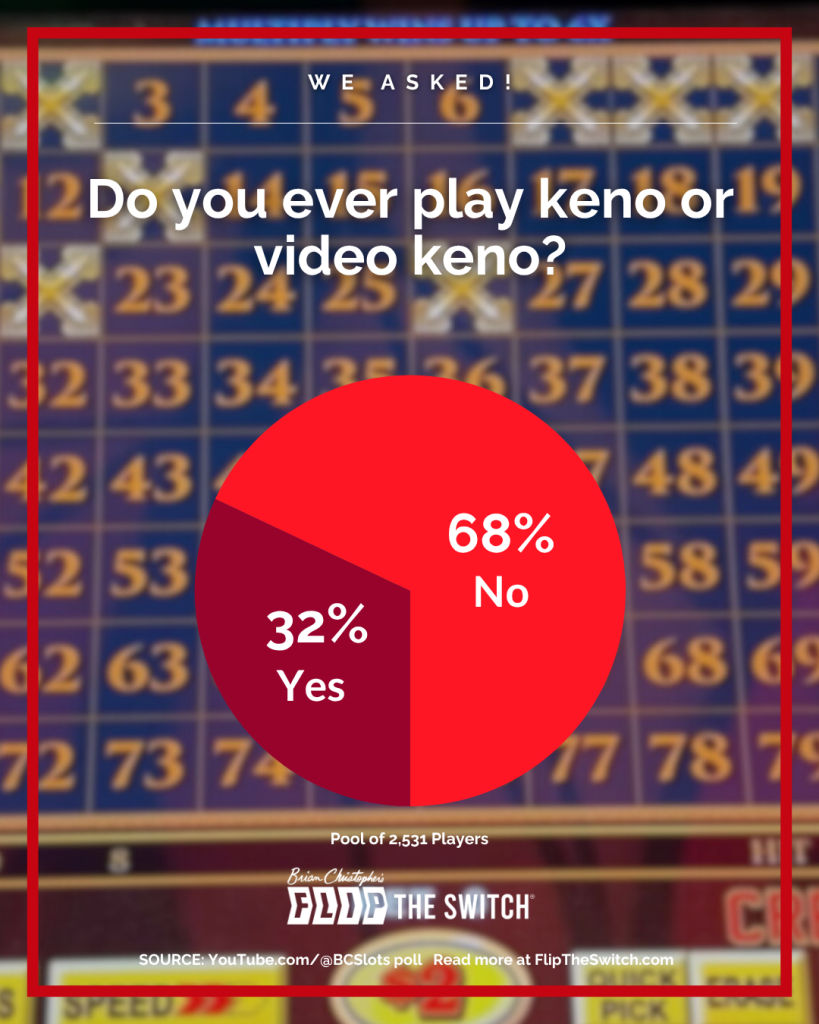
More involved with Keno and your chances of winning is how many numbers you opt to play. That’s because the more numbers you pick, the longer your odds in winning the top prize by matching all your numbers (of course, that top prize will also be larger).
For instance, matching 7/7 numbers is about 1 in 41,000, roughly the same as getting a royal flush on Video Poker. But matching 8/8 numbers is roughly 1 in 230,000, nearly 6 times as difficult to achieve.
The odds are based on picking any numbers, because the odds of any number coming out are the same. Keno’s structure is a table of 80 numbers, and during each draw 20 out of the 80 will be selected. So the odds are getting 7/7 or 8/8 out of the 20 numbers being picked in a round, which will cover only 25% of the board.
Whether your particular lucky numbers get picked in a particular round is certainly up to some level of luck, because the randomness of a draw (whether with physical balls in live Keno, or the random number generator in virtual Keno) could lead to no numbers being marked or all the numbers being marked (the former being more likely than the latter).
But in the long run, no one combination of numbers will do any better than another, so your lucky numbers are really for you and not for any specific benefit from the game.