

Today’s casino myth is around a question we get a lot, and have an answer many aren’t expecting:
Is it true that themed machines like The Walking Dead, Madonna, Willy Wonka, et cetera are less likely to pay out because they have to pay royalties?
Diane C.
Over the past few years we’ve spoken with a number of the game makers about this, and the answer is pretty consistent – nowadays, this is less likely to be the case than it would have been 10 or 20 years ago.
The same range of payouts (from 85-98%, traditionally) that any slot machine ships with will be built for these games. We had one game maker tell us they do expect that casinos will set these a bit lower than unlicensed games, but not unreasonably so, as at the end of the day they’re still trying to achieve an overall average for their floor.

For example, let’s say a casino has a goal of 1 cent slots paying out 90 percent across their floor. Let’s say a licensed game comes with choices that are 89.5 percent and 90.5 percent, and an unlicensed game has the same choice of 89.5 percent and 90.5 percent. One casino could opt to choose 89.5 percent for the licensed game, and 90.5 percent for the unlicensed game. Another might choose the same option for both if they set things the same across the board.
What many game makers do nowadays to encourage the casinos to choose a more balanced percentage is set the bet levels higher on licensed games than their unlicensed counterparts.
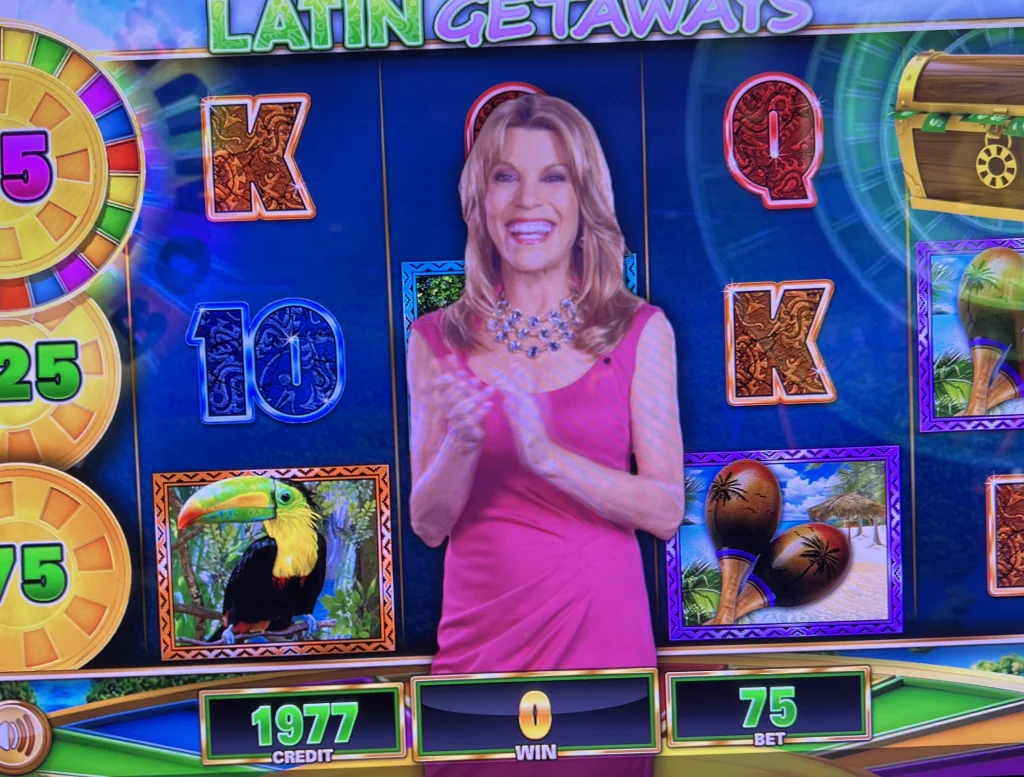
So, you might see a minimum bet of $1 a spin on a Wheel of Fortune slot that, if it weren’t Wheel of Fortune, that same game might be 75 cents. In fact, a number of Wheel of Fortune video slots in recent years have been updates to existing IGT slot mechanics and increasing the minimum bet in tandem by adding big progressives and a wheel spin.
Another thing to keep in mind is many of these licensed games also come with giant progressives. A percentage of your wagers will go to feeding that progressive, but unless you’re the one lucky person who wins it, the payouts in the rest of the game will be reduced by some small amount – 1-2 percent perhaps – that will still impact things for everyone else since that progressive is so hard to achieve.
By having more money wagered on a machine, and that money having to work against a house advantage of around 10 percent, it will ultimately make more money for the casino over time. This helps casinos offset the higher cost of the game, which licensed games are often leased to a casino instead of sold, and ensure a game works economically.
In that way they are getting more money out of players, but not by paying out less overall, but instead getting you to bet more at a time, and because there’s a swing for the fences progressive that eats into the payouts in the rest of the game. But they’re not set to a substantially lower number; if anything, they’ll be a small amount of difference at most.













