We shared recently the news that the IRS confirmed the jackpot handpay threshold would be increasing from $1,200 to $2,000 as of January 1, 2026. This finally meant casinos had more concrete assurance of the federal government’s position on things.
But among the issues that are becoming clearer now this is confirmed, as some states have their own reporting requirements, and their laws didn’t move in lockstep with the federal one.
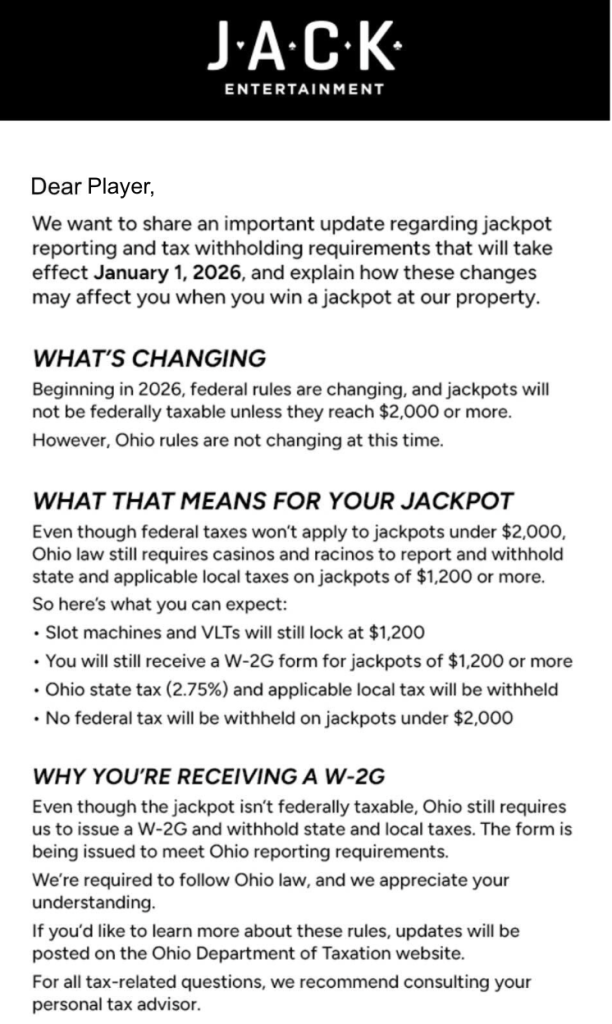
Some casinos have sent out notifications that in impacted locations, the machines will still lock up at $1,200, because they have to report those wins to the state government in which their casino is located. If that state requires automatic deduction of state taxes, that step would be taken as well.
In situations where the state government must be notified but it still falls under the $2,000 threshold that the federal government would need to be alerted, the emails read as if only the state government would be receiving the notification.
We saw multiple poorly written emails that indicated that federal taxes would not be due, as if wins under the $2,000 threshold didn’t require income tax reporting. The IRS would disagree, as all gambling wins are considered income under their rules.
And this shows the level of complexity that goes with all these changes, and that doesn’t even factor in the changes around loss deductions on your federal tax return.
We’ve been fielding a lot of questions about these changes, and in the coming weeks will continue to share examples and what to expect, but this is the best time to find yourself an accountant familiar with how gambling and taxes work, and ensuring they are able to help with your particular situation.
Where you play, where you reside, and whether you can itemize your deductions are among the elements that can have key implications for you, both when filing your federal and state tax returns.