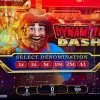
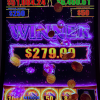
For those of us in markets where Bingo Machines exist (and we count ourselves at Flip The Switch among them being based in California), you may notice that sometimes popular brands that exist on casino floors in Las Vegas can take awhile to make their way to locations with Bingo Machines:
Is there a reason most of the newer slots you and other channels are playing are not offered in the Class II Casinos? When we finally do get them, it’s a year or two later and they’re still not the same.
Patrick U.
For awhile, it was unusual for slot makers to release Bingo Machine (Class II) variations of games because the way the math worked was too different. Legally, Bingo Machines are a different designation, so there was also scenarios where slot makers wanted some distance between the two machine types. Sometimes you’d see variations of the concept with different branding, but that was really to ensure protection of the popular brands as slot titles and not Bingo Machines.
Nowadays, though, you do see more of those common brands showing up. We’ve seen popular themes like Dancing Drums and Huff N’ More Puff show up in Bingo Machine variations in recent years. Some companies, like Everi, tout their ability to build both slot and bingo variations of their games in tandem, so they can release the same games out to both markets at once should they choose to.
But one of the biggest reasons why you see the delay is risk aversion. Even though it may be the same game, there’s still a development cost to building a variation of that game for Bingo Machines, testing it, marketing it, etc. It’s a whole lot easier to justify the expense when a game is already a proven winner.
So what you’re most likely seeing is the slot makers being methodical, picking the games that are already doing well for a conversion, and using the proof of their success on slot floors in places like Las Vegas to get casinos excited about bringing them onto Bingo Machine floors as well. And that process could well take a year, before casinos themselves start plotting their purchases, which can delay things even longer.
The other thing is finding the right balance that makes a game workable in the Bingo model, in terms of things like bonus frequency,hit frequency, etc. Sometimes more complex games are harder to make the jump because of other factors like the number of bingo patterns and draw variations possible.
But over time, the mathematicians that develop these games have been able to get more and more creative to find ways to bring games over that previously wouldn’t be possible. And as the tools to build games get more sophisticated, I’d expect that, similar to what Everi’s already doing today, more companies will be able to parallel path games so that hit games can make their way into other markets even more quickly.
Have a question? Submit yours here!