


Finding a balance when it comes to slot machines is tricky. Some games will attempt to push the envelope, and players will decide if it’s working or not.
One area where the trend has been very clear is the increasing volatility of slots, and with it the decreasing frequency of bonuses. Speaking with industry experts in recent years, a bonus can now take 100-120 spins to realize, on average. This is more than twice as high as it was 10-15 years ago.
If an average slot player completes 500 spins an hour, that can mean it can take 10-15 minutes to achieve a bonus. That’s a long time! And all the while players are spinning, spending their money in pursuit of that bonus.
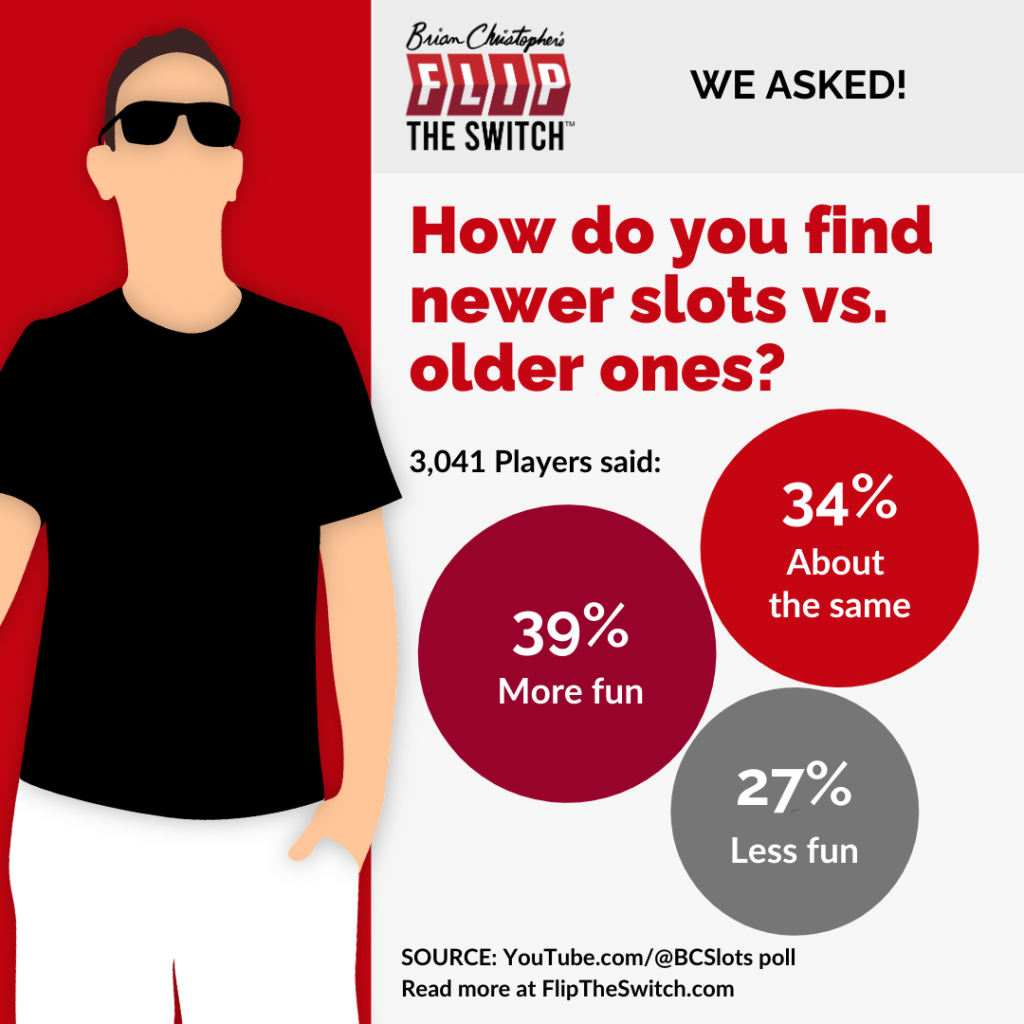
Players are mixed about whether newer slots are as fun as older ones – 39% said they were more fun, but 27% said they are less fun. About a third of those polled on Brian Christopher’s YouTube page said it was about the same.
When Dragon Link hit the market, the marketing included a note that in a bank of four machines, one will enter a bonus an average of once a minute. The flip side to that is that the free spins bonus in particular on these games are really tough – it’s not unusual to get a bonus that’s very light on payouts. But at least as a player you’re feeling like you’re getting a chance at something. And line hits in this game can still be rewarding.
It feels like increasingly games are moving money to those ever hard to reach bonuses. Line hits are so anemic on some new games as to be almost not worth it – you’re basically playing for a bonus.
At that point, bonus buying features seem almost a requirement – why waste 20 minutes chasing a bonus that may or may not come when you can spend the money in one shot and buy the bonus? Of course, it’s tough to say because that lucky first spin bonus can still happen.
I see increasing complaints from players that the higher volatility of games are taking the fun out of it. Fortunately, some slot makers haven’t abandoned the lower volatility end of the spectrum, putting out offerings that can feel a lot more active, even if the payouts aren’t massive. Of course, then the flip side can become true – some players don’t like it because the pays are too small.
But it also seems like these options are becoming harder to find over time, as casinos (and players – let’s be clear) adopt machines with ever more elusive bonuses. The top performing games on the floor are games with perceived persistence elements, ones that drive players to keep playing by making it feel like something’s happening, a great solution when not much actually is happening.
Some players are hitting a wall – slots are becoming more of a grind and less fun than before. Games with frequent features and things to keep a player occupied are being replaced by games with punishing runs that require you to keep chasing a bonus to have any shot of making up for things.
Whenever I talk with a player in this mindset, they almost always say they hope casinos are paying attention to what this is doing to players by chasing them away. With casinos hitting new highs in recent years in terms of revenue and profitability, the money hasn’t shifted yet to provide that indication.
But for awhile the money was coming from less players (with those who were still going spending more), so if those players continue to pull back, that might lead to some rethinking. But as long as the hard games are doing their job of getting some percentage of players to play, it’s unlikely things will change. If anything, current signs point to a continuing evolution towards the harder and less likely, even as overall payouts remain pretty consistent.













