We’ve shared a lot about fast pay, or self pay, jackpots, where instead of going through a full process every time a reportable gambling jackpot is won, a player has all their jackpots rolled up onto a single document for the day.
This can be very helpful when it comes to managing paperwork, and avoids the sometimes lengthy waits, a reasonable issue when it comes to bigger bettors who could see multiple jackpots in a single session.
But some players wondered about tax withholding:
What about taxes? Can you take out federal taxes like you can with the tax paper? How does that work?
Casual Slotz on Facebook
We presume this isn’t likely a feature for two reasons.
The first is simply that it would complicate the process. The machine would have to be instructed to deduct a percentage of the amount of the jackpot. Computers can be programmed to do all sorts of things, but we’re not aware of this being a feature slots can support (although give it time – I’m sure they’ll figure it out).
But a more practical reason may be the main reason why this doesn’t happen – players who use Self Pay do so because they already get enough reportable jackpots to itemize, and therefore write off, their losses against their wins on their taxes.
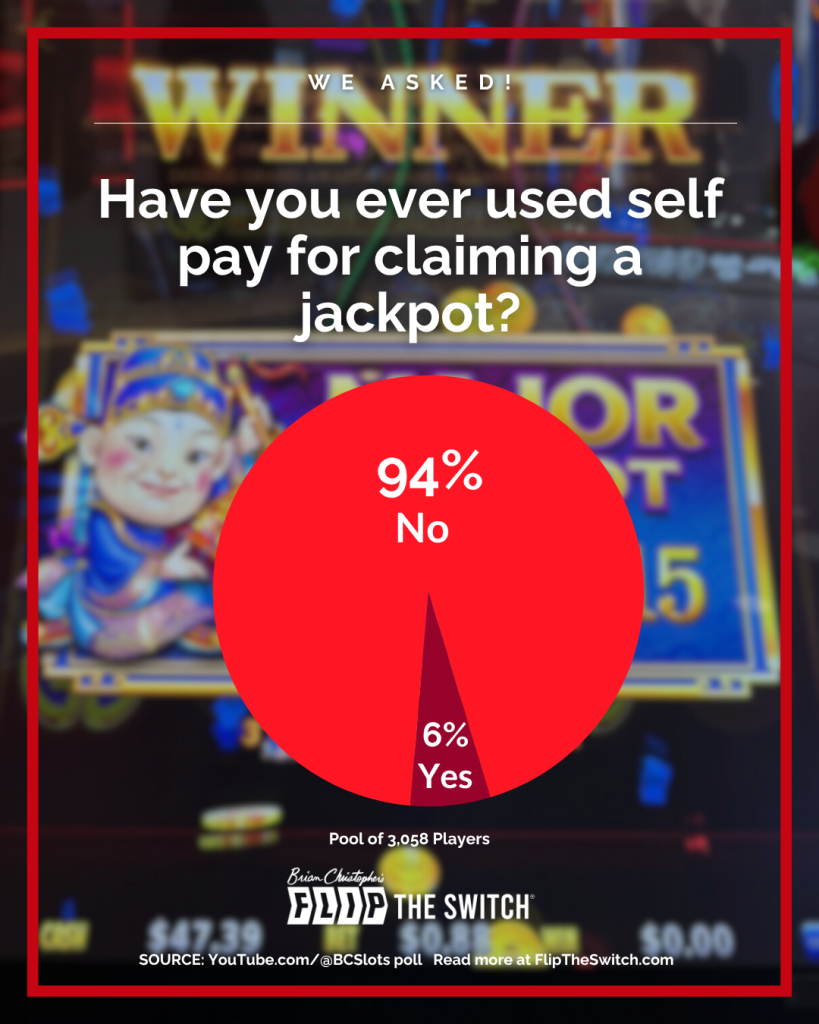
For the majority of us, handpays simply don’t occur often enough to take time upfront to register for self pay/fast pay. Many of us also don’t play in high limit frequently, where this technology is most often implemented.
For most of us, getting a single handpay is a celebratory moment so waiting for the payout and such isn’t too big a deal. Enrolling in self pay simply isn’t necessary.
If you’re getting jackpots with enough frequency that self pay would be a real time saver, you probably aren’t going to be the one asking for taxes to be taken out. But if you still prefer that to be done, the traditional jackpot handpay approach is still available in casinos that offer self pay or fast pay.
Have a question? Submit yours here!