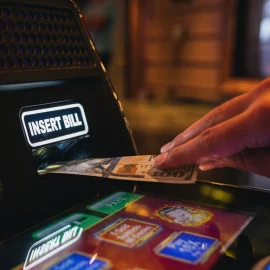
I had my first jackpot handpay in nearly a year recently. It wasn’t a normal jackpot, though. As I was concluding a bonus on a new slot, I noticed the players card screen had blanked out, as had the light around my card. I figured it was time to move on since it couldn’t be recording my play, but the machine had other ideas when I hit the cash out button.
“HAND PAY: $68.65” showed up on the screen.
For the second time since I’ve been playing slots, I had a machine choke on the cash-out step. It looked like something communication wise had gone wrong. While I waited for the attendant to bring me the money left on the machine, it seemed to recover, as by the time she returned the players card screen had caught up with what was going on (although the handpay still had to be completed).
One of the more amusing moments was there were two witnesses to watch me get paid this small sum! I am normally only fortunate enough to have one witness.
It’s somewhat remarkable how infrequently something truly goes wrong with a slot machine. I’ve never had a machine crash and burn the way one did on Brian Christopher while filming a video, where the machine failed to recover altogether, but I’ve seen machines randomly reboot when the computer just got overwhelmed (including within a bonus, only for the slot to pick right back up where it left off).
I’ve seen sticky buttons and screens that won’t recognize a finger’s touch. I’ve seen doors that will close but won’t “close” in the eyes of the slot machine. And often, some quick work by an attendant can bring a machine back to life.
Our recent article with IGT on cabinets shined an interesting light on what exactly goes into making a machine robust. Whether it’s surviving a slot tournament, designing it to be easier for players to see and hear without distracting the player next door, or deciding exactly which features it should have (and where they should be placed), it’s a complicated process.
It’s remarkable not only how many machines get designed and through a testing process over the course of a year, but also how many different ways it can be done. As I shared in my venting about the poor phone charging process, there’s a lot of different ways this gets set up, with varying degrees of success.
These machines operate 24 hours a day, and when in active use are handling hundreds of spins an hour, every hour, every day. Some of them have been operational on casino floors for years or even decades. With that, given how infrequently things tend to melt down or become problematic, it’s pretty incredible how well built these cabinets are to keep us all entertained.
Of course, part of that is up to the casino. I’ve seen some casinos who have a pristine selection of machines, well maintained and operational, and casinos that have a lot of machines out of service and quite a few that probably should be put out of their misery. I’ll never forget waiting nearly an hour for an attendant to assist me with a machine he said needed help “at least once a day.” No wonder why I had to wait an hour – he’s running around helping people who are stuck on poorly kept machines.
But when it’s all being kept up properly, like a house or a car, it can take care of you for a long time. And that starts with some well-designed equipment.