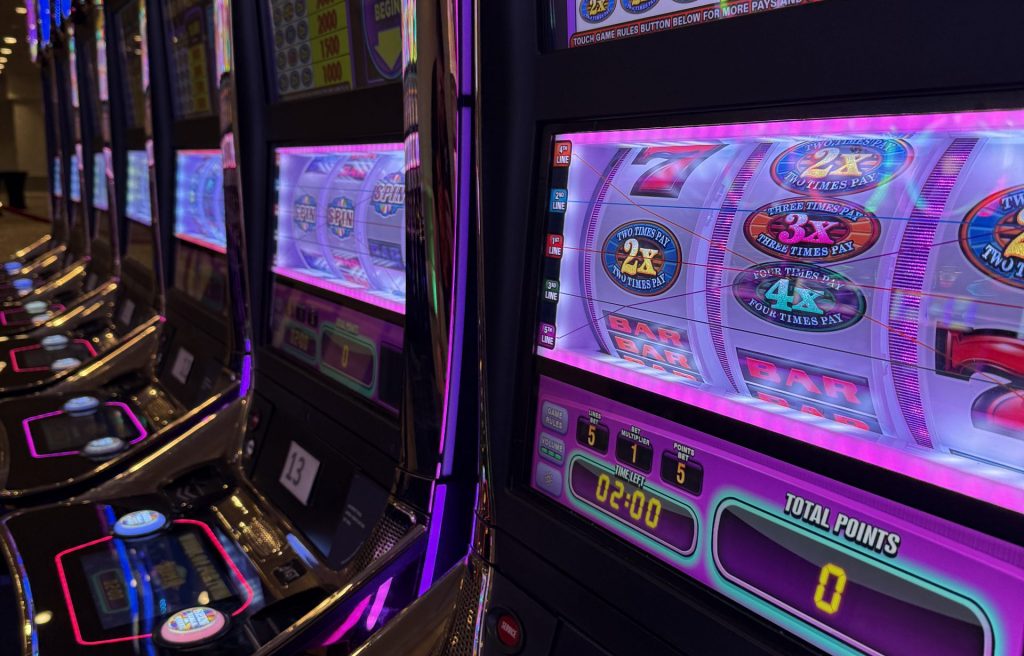
One of the topics we routinely get questions about is the payback percentage of a slot, going beyond the definition of it. Here’s a couple of recent examples:
What does a 90 percent payback mean? Is it a 90 percent payback over 24 hours, a year, the life of the machine?
Troy W.
Percentage payback is officially based off the totality of outcomes that a machine has to offer, and the percentage those outcomes would pay back over time relative to the amount invested.
Imagine 1 million outcomes on a machine, each of which cost $1. If you bought all 1 million outcomes for a total of $1 million, and they paid back $900,000, that would be 90 percent payback.
With the random number generator (RNG) in place, it’s expected that each one of those outcomes will occur, on average, the same number of times. So the longer a machine is in play, the more likely the ups and downs can be smoothed out.
So the lifetime of a machine is the most accurate, but effectively the longer a machine is on the floor, and the more outcomes it is able to deliver, the closer it’s expected to get to the payback percentage.
Many machines for various reasons will never perfectly arrive at it, because variance is still real – a wide-area progressive machine that pays out a $1 million prize will have more trouble reaching the target as quickly, for instance.
But casinos also have hundreds or thousands of machines on the floor, so any one machine doesn’t necessarily have to do all the work. And close is usually close enough for the casinos.
How do you know what the machine’s payout percentage is set at? Back 30 years ago in Vegas they would put the percentages above the machines when they had the pole levers so you always knew what the payback percentage was. You know the good old days when they used to give back 90, 95 or 98%. So how do we know what these electronic machines’ payout percentage is? Is it listed anywhere in the casino or on the machine?
Tim J.
Unfortunately casinos aren’t required to reveal that information on a per machine basis, so they don’t. There are some jurisdictions outside the United States that require this, but to our knowledge no jurisdiction in the U.S. requires it.
In many markets payback reporting at a per-casino or per-market level is available, and that can be helpful information to know what to expect at a higher level, but unless a casino chooses to market a machine’s payback percentage as a marketing tool, you’re unlikely to have much awareness of what the payback percentage is when you sit down at an individual machine.
Have a question? Submit yours here!